
What AI Adoption Resistance Is Actually Protecting
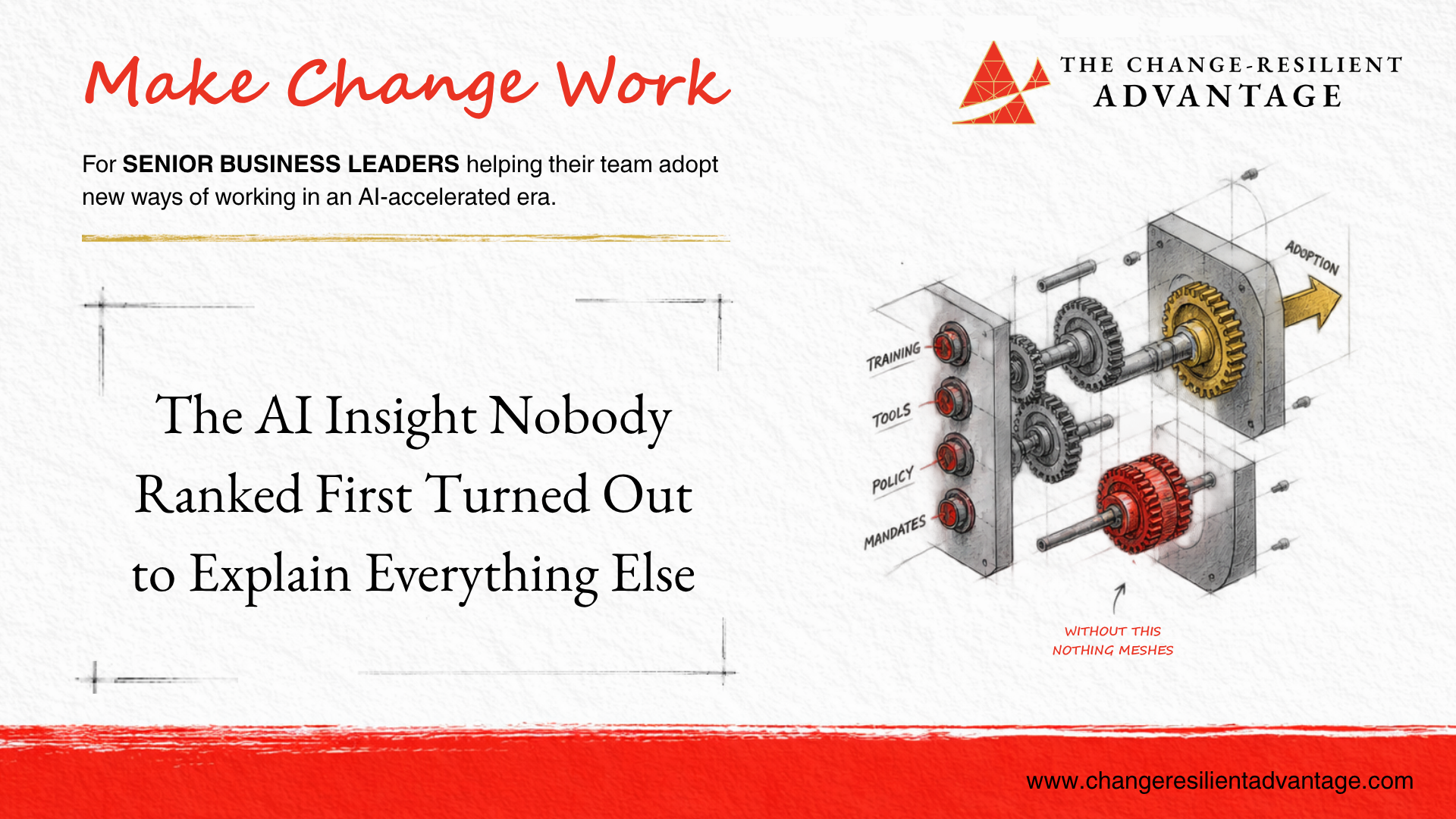
You can adjust the visible controls, but the system won’t work until the hidden part is aligned | Illustrations co-created with AI.
We spent months in conversation with 27 senior leaders on how AI adoption actually plays out inside their organizations, then polled a room of them on which of five related insights they wanted to hear about most. The insight that explains the most turned out to be the one nobody picked first. Underneath most AI adoption conversations sits a more personal question: am I still going to be needed here? Does what I know still matter? A shared AI vision carries that same identity work to the organizational level, and without it, training time, tool choices, and resistance all lose their reference point. Leaders were also confidently wrong more often than they'd expect: a vision they believed had landed, a policy they assumed people had read, a mistake they assumed a process had caught, none of it checked until something forced the gap into view. Change has always worked this way. What's different now is the speed, and the stakes.
The AI Insight Nobody Ranked First Turned Out to Explain Everything Else
At a recent Leader Exchange, we started the session with a live poll: Rank five AI adoption insights by interest. Tactics for pushing adoption and reading resistance won by a wide margin. The insight about uneven adoption, culture, and capacity was the one insight nobody picked first. That gap is the whole story of this issue. We just spent months in conversation with 27 senior leaders across sectors on how AI adoption actually plays out inside their organizations. Those conversations surfaced plenty of tactical detail, on tools, policy, mandates. But underneath nearly all of it ran something more personal: am I still going to be needed here? Does what I know still matter? A shared AI vision carries that same identity work to the organizational level, and without it, training time, tool choices, and resistance all lose their reference point. Leaders also confidently made wrong assumptions more often than they'd expect: a vision they believed had landed, a policy they assumed people had read, a mistake they assumed a process had caught, none of it checked until something forced the gap into view. Change has always worked this way. What's different now is the speed, and the stakes.
What the Room Asked For
At a recent Leader Exchange session, we asked a room of senior leaders to rank five insights by how interested they are in hearing about them, one being highest. After wrapping up a series of conversations about AI adoption with 27 senior leaders across healthcare, financial services, manufacturing, energy, education, and a handful of other sectors, there were five categories of findings to walk through. We were curious about what the room wanted to hear about first, another insight in and of itself.
"How we push adoption and how we read resistance" won by a wide margin. "Uneven adoption, culture, and capacity” was the one insight nobody picked first.
Here is what's interesting about the poll result. The tactical question, how do we push this, how do we read the pushback, is the one every leader in that room could act on Monday morning. It has levers. The culture-and-capacity question is slower and doesn't come with a clean playbook. Naturally, the room reached for what it could implement right away.
But when we laid out what actually came out of those 27 conversations, the thing that explained almost everything else in the findings lived closer to the insight nobody picked first than the one that did.
The Question Nobody Asked Out Loud
Across nearly every conversation, alongside plenty of tactical detail about tools and policy, a more personal question ran underneath: am I still going to be needed here? Does what I know still matter?
That question sits underneath tool training, underneath policy, underneath most of what organizations spend their AI budget on. It's identity work, and it doesn't show up on any training agenda.
When it goes unanswered, it doesn't disappear. It shows up as resistance, and it gets misread. A marketing lead who won't touch AI-generated copy may be protecting the value of craft she spent years building. A subject-matter expert who keeps testing the tool past the point of reasonable doubt may be protecting the thing that makes him worth consulting. Name it as fear or laziness, and you lose the actual information resistance is carrying about what people are trying to protect.
Vision Does Double Duty
Most of the organizations we talked with don't have a stated, shared AI vision. Where one exists, it's usually pitched as productivity or efficiency, and it frequently stays at the top of the organization instead of reaching the people who need to act on it.
That gap matters more than it looks. A clear AI vision is the same identity work leaders need to have with individuals, answered instead for the whole company: what are we actually here to do with this, and why.
Without it, three things get harder at once:
People don't protect time to learn a tool, because nobody has told them what it's for.
Leaders can't tell which tools they actually need, because "need" only makes sense against a goal.
Resistance loses a reference point. Without a shared answer to where the organization is headed, it's much harder to tell what a person is protecting and channel that concern toward something useful.
Vision is the multiplier sitting underneath the rest of the AI strategy. Skip it, and everything downstream stays guesswork.
Leaders Confidently Make Wrong Assumptions About What's Actually Happening
The third pattern across those conversations was a gap between what leaders assumed was true and what was actually happening on the ground. A vision leadership believed had landed, hadn't traveled past the top. A policy leadership assumed people had read, people hadn't opened. A costly mistake that got caught before it went out the door got caught by luck, not by any process built to catch it.
The pattern traces back to a missing feedback loop. Leadership decides something is happening, and without a mechanism to check it, the belief sits unexamined until something forces the gap into view: a resignation, a mistake that does make it out the door, a poll result nobody expected.
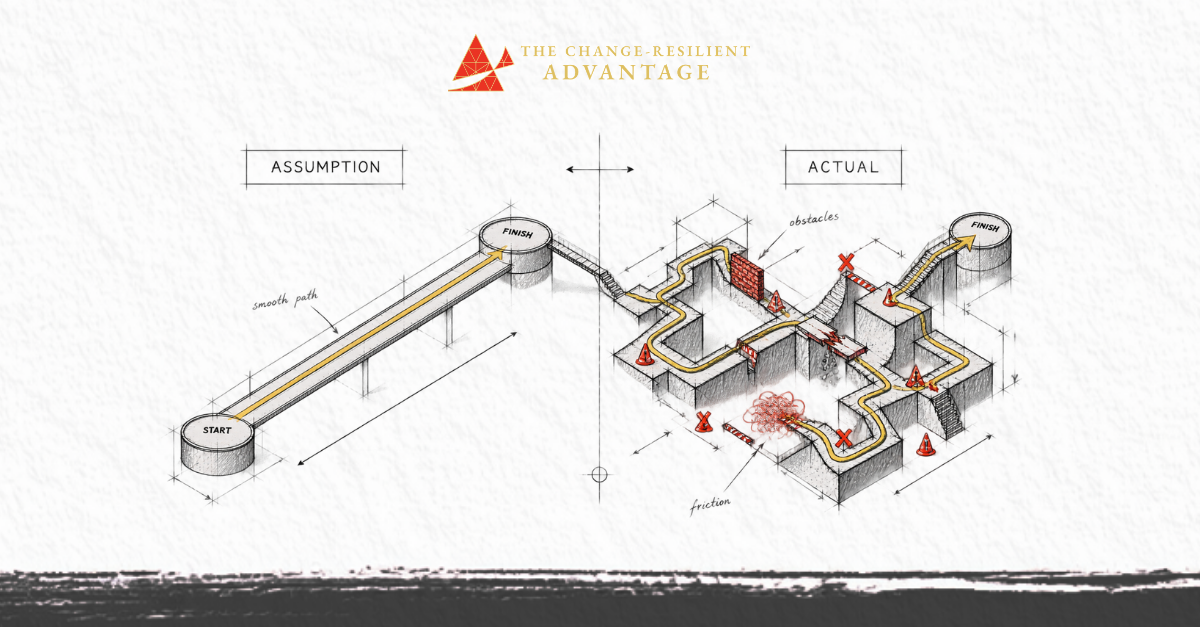
The gap between what leaders believe is happening and what's actually happening on the ground.
What to Do Monday Morning
Change has always worked this way. An unclear direction produces uncertainty, and uncertainty produces resistance and inconsistent behavior. That is classic change work, and it did not begin with AI. What's different now is the speed things move and how much is at stake if the gap goes unaddressed.
This is the human operating system underneath any AI rollout: identity, vision, and whether anyone is checking the gap between what leadership believes and what's actually happening. The room we polled asked for tactics on resistance. Fair ask. But the move that actually changes how resistance shows up, sits closer to the insight that nobody picked first in the poll: naming the identity question directly, building a vision that travels, and putting a real feedback loop in place to check belief against reality.
If you want to discuss how these insights might apply to your organization, let’s chat: https://www.changeresilientadvantage.com/discovery-call.
About The Change-Resilient Advantage
The Change-Resilient Advantage partners with senior leaders and organizations navigating high-stakes change and AI adoption. We build the leadership and culture conditions that get your people to adopt new ways of working.
Clients have seen measurable results including 100% of leaders reporting increased confidence to lead their teams through restructuring, 95% of employees gaining clarity on a new organizational vision, and sustained market share growth during industry decline. Learn more at www.changeresilientadvantage.com
