
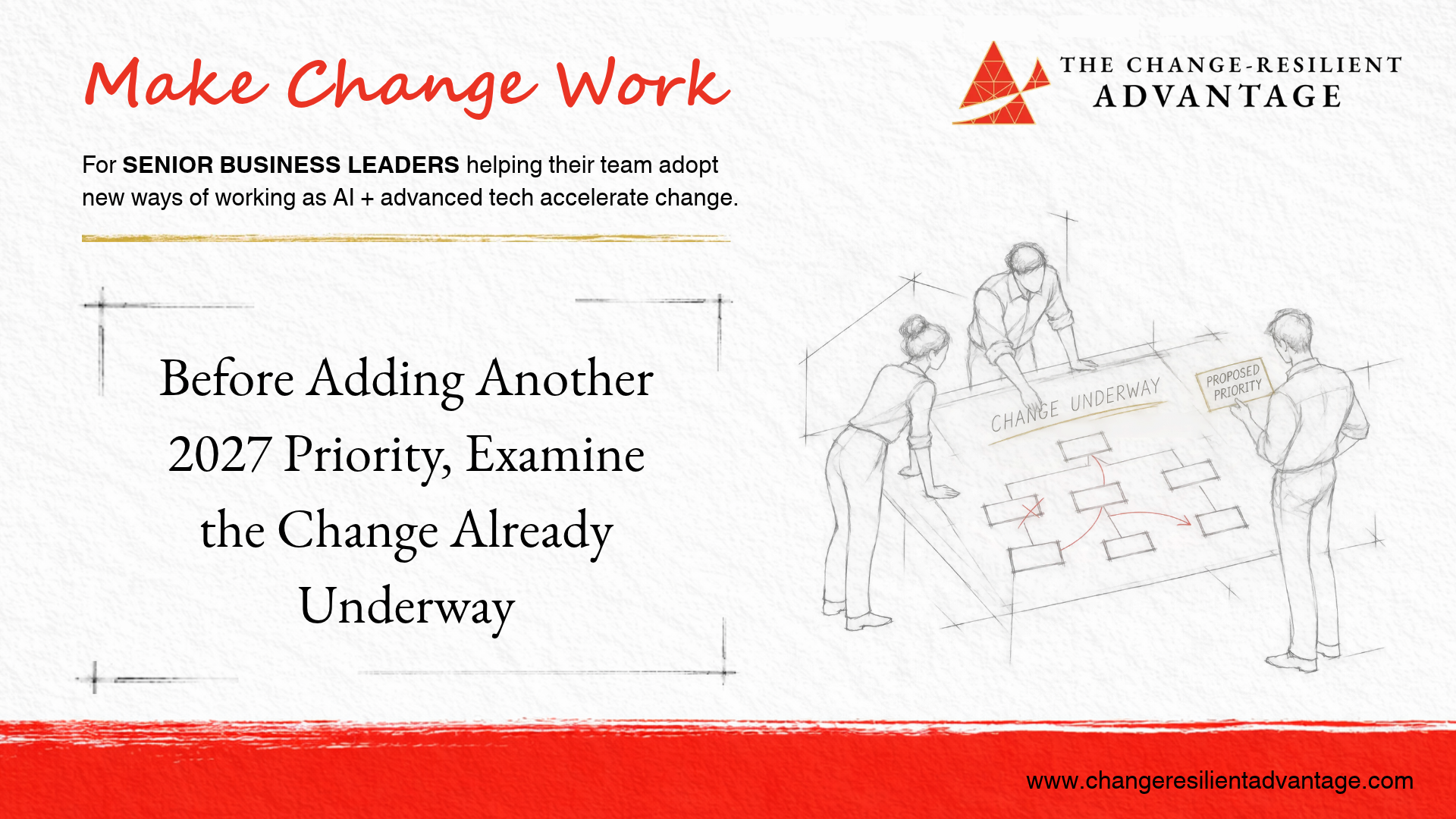
A new priority depends on an organization still absorbing change already underway. | Images co-created with AI.
Before committing to a new strategic priority, leaders need to understand how changes already underway have affected the organization’s ability to deliver it. People may still be working out existing changes to direction, responsibilities and collaboration while the next priority takes shape.
In current client work, we are seeing uncertainty about direction and people’s contributions persist while everyday work continues. A proposed priority may depend on shared understanding that leaders assume already exists.
People can pursue the same goal with different expectations about what takes precedence, who decides and how they should contribute. Those differences can lead to competing effort, delayed decisions and rework. Understanding them before committing helps leaders judge the proposed priority’s scope, timing, ownership and support.
The response may require executive clarification, agreement across functions or involvement from affected teams. Practical time and staffing matter, as does personal capacity: the steadiness, perspective and agency to engage under pressure. Existing strengths provide a foundation to build on. Leaders do not need every existing change to be settled before proceeding, but they need to account for its continuing implications when deciding what the organization can reasonably take on.
The organization carrying the plan is already changing
A 2027 priority may depend on people making coordinated decisions and working differently together. Those same people may still be absorbing a restructuring, a new leader or a system already launched, and working out what it means for their responsibilities and contribution.
In current work with an operational team, our remit is to strengthen its ability to navigate continuing change. We are seeing uncertainty about direction and people’s contributions persist while everyday work continues. A further strategic priority would depend on people coordinating their work even as they are still making sense of existing changes.
A new priority can inherit unresolved uncertainty
A capable team can keep delivering while people hold different views of what takes precedence, who decides and how they should contribute. Changes already underway, along with the perspectives new colleagues bring, can unsettle understandings that once supported the work.
For example, a proposed priority might require two functions to change how they hand work over. If an earlier change has left each assuming the other owns a decision, progress can stall despite agreement on the goal.
Committing to results without examining those assumptions risks competing effort, repeated clarification and rework. These are potential delivery consequences to consider, rather than inevitable effects of change.
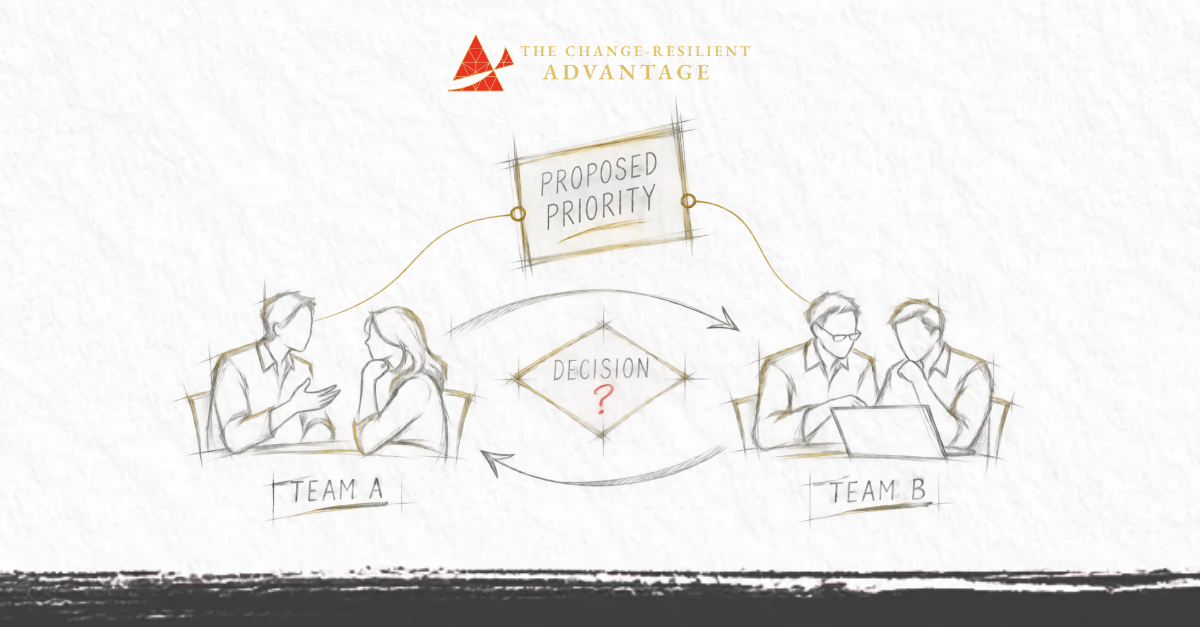
Agreement on the goal can still leave ownership unclear.
What the proposed priority would require
Before committing, leaders need to understand how the proposed priority would sit alongside existing commitments. Different signals about what takes precedence may need executive clarification before teams can direct their effort.
Delivery may also require decisions across functions, different responsibilities or new collaboration. The people doing the work can reveal where existing changes have left those arrangements unsettled, including questions requiring decisions beyond the team.
Expertise, trusted relationships and effective practices are equally part of the starting point. Leaders need to understand what the proposed priority can build on and what further changes could disrupt.
Understanding the change already underway should influence the next commitment.
Match the response to what the change requires
The response should follow from that understanding. Some needs require executive decisions; others call for agreement across functions, clearer ownership or involvement from affected teams. These arrangements need attention as existing changes and the proposed priority intersect.
Practical demands include time, staffing and keeping current work moving. Personal capacity is separate: the steadiness, perspective and agency to engage deliberately under pressure. Support for one does not automatically address the other.
What leaders learn should influence the commitment itself: narrowing the proposed scope, changing its timing, clarifying dependencies or resourcing support alongside it. Where conditions are strong, it can provide a firmer basis for proceeding. Existing changes may continue, but their implications belong in the decision about what comes next.
Join the conversation on December 3
What will your 2027 results require people to do differently? Join our next online Leader Exchange on December 3, from 11 a.m. to noon Eastern, to explore the change your plans depend on and what people need to make it work. Apply to request a seat at www.changeresilientadvantage.com/leader-exchange.
About The Change-Resilient Advantage
The Change-Resilient Advantage makes critical change work in practice. We partner with senior leaders and organizations to create the leadership and culture conditions people need to adopt new ways of working, especially as AI and advanced technology accelerate the pace and pressure of change.
Clients have seen measurable results including 100% of leaders reporting increased confidence to lead their teams through restructuring, 95% of employees gaining clarity on a new organizational vision, and sustained improvements in engagement, collaboration, and ownership through periods of significant change.
If your plans depend on a team that is already navigating change, book an introductory conversation to discuss what delivery will require and where dedicated change support could help.
