

Manager preparation connects executive decisions with the work needed to deliver them. | Images co-created with AI.
Shifting priorities, new ways of working and AI adoption ask people to work differently. Executive clarity about those priorities does not automatically create the shared understanding needed to deliver them.
Managers must make sense of decisions while working through implications for their own roles and teams. Leaving that preparation to individual managers risks different interpretations and unresolved questions across the organization.
In our broader work with a client navigating several changes at once, manager preparation was one component. Advance context, space for questions and support for team conversations connected executive direction with the work managers would lead.
Communication was part of that leadership task. SCARF offers a lens for considering certainty, autonomy and fairness. Stakeholder involvement also required thoughtful decisions about timing, confidentiality and where people could contribute, even when executives had already decided the direction.
The work continued beyond the announcement as understanding and responsibilities needed clarification. For senior leaders, the question is whether the conditions for delivery have been considered and resourced alongside the priority itself. Manager preparation belongs within that wider organizational requirement. The value at stake is the organization’s ability to turn its decisions into changes in everyday work.
Start with what 2027 priorities will ask of people
As organizations set priorities for 2027, managers will be expected to turn those priorities into something their teams can understand and act on.
Shifting customer priorities, AI adoption and different ways of collaborating can each ask people to work differently, even within an existing plan.
Senior leaders may have reached a clear decision after months of discussion. Expecting managers to lead from the same starting point leaves an important part of delivery unaddressed: managers still need to understand what the decision means for their responsibilities, teams and everyday work.
In our broader change work with a client navigating several changes at once, manager preparation was one component. Here, we’re focusing on how we worked with senior leaders to prepare managers for an organizational change, alongside transitions people were already working through.
Executive clarity does not transfer automatically
In that engagement, senior leaders had spent time developing the direction. Managers needed to understand the rationale and implications for their responsibilities before discussing it with their teams.
We designed an initial explanation and space to return to the discussion after people had time to take it in, considering emotional needs alongside practical arrangements.
Managers may have questions about their own roles while being expected to provide direction. Leaving them to resolve those questions individually risks different interpretations across teams. Space to raise them helps identify where senior leadership decisions or clarification are needed.
Consistency depends on more than shared messages
We worked through the support managers needed to explain the direction, discuss changes affecting individual employees and bring people into their new teams.
We discussed asking managers to anticipate employees’ questions so these could inform the answers and support being prepared. Materials included shared messages, talking points and information about the changes.
We also considered what needed to be consistent and where managers could adapt. A shared explanation could be followed by a team or individual discussion. Consistency requires a common understanding of the direction alongside room to respond to different circumstances.
David Rock’s SCARF model considers how social experiences can be perceived as threats or rewards. Certainty, autonomy and fairness concern what people can anticipate, their sense of control and whether a process feels fair. This lens supports explaining what is known, acknowledging open questions and showing where people can contribute.
Manager preparation belongs within the organization’s plan for delivering change.
Involvement needs clear decision boundaries
In a leadership workshop we facilitated in the engagement, we worked through how leaders could provide consistent direction while involving people affected by the change.
Relevant stakeholders needed enough context to contribute at an appropriate point. Confidential information had to remain within the people authorized to receive it.
In regulated environments, confidentiality and approval requirements shape who can be involved, when, what can be shared and which parts of implementation they can help shape. Managers need to understand those boundaries for themselves: why they may not have been involved earlier, what cannot yet be shared, and where they can contribute. That clarity supports their own preparation and their decisions about involving their teams.
The starting point is that executives have decided the direction. Change happening with people means making clear where managers and teams can shape how that direction is put into practice. Explicit boundaries make meaningful involvement possible while keeping the agreed direction clear.
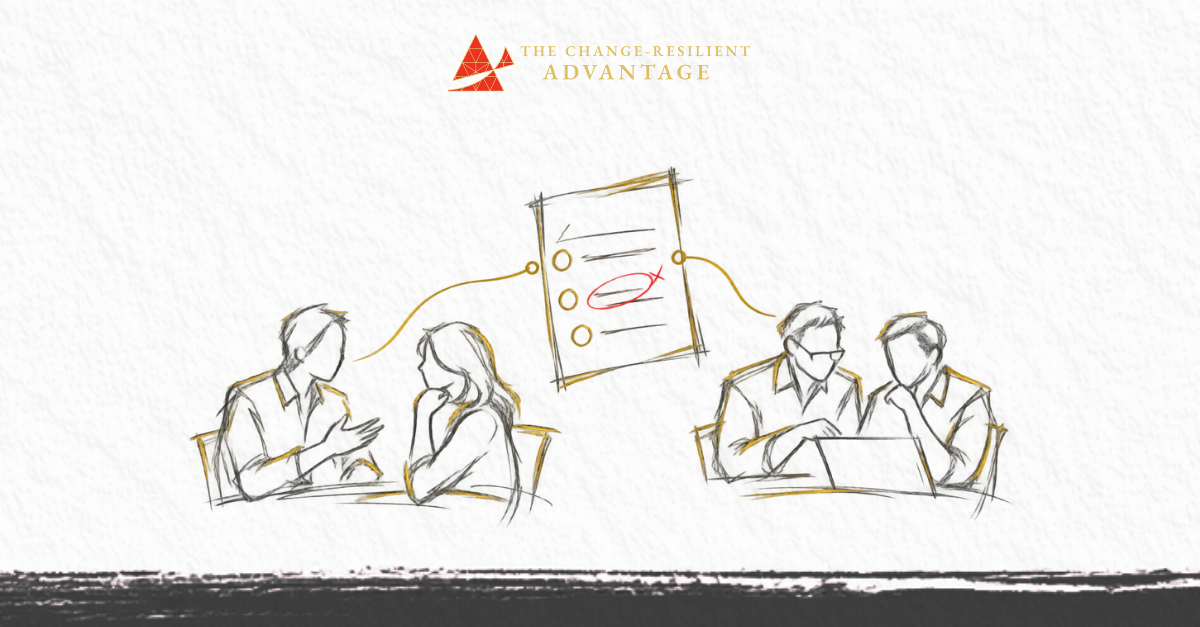
A shared direction requires common understanding and room to respond to different team circumstances.
Put the conditions for delivery into the 2027 plan
The work continued beyond the announcement, with discussions about teams’ differing understanding, manager support and responsibilities still needing clarification.
That continuing work matters to the business. Unresolved questions can leave teams interpreting the same priority differently, requiring clarification and rework when attention is already stretched across several changes.
The value of new structures, technologies and working practices depends on changes in how people decide and work together. Manager preparation is one part of the organization’s ability to realize that value.
The executive planning question is whether the leadership, culture and support needed for delivery have been considered and resourced. Access to decisions, routes for questions and continuing support all require attention beyond the initial announcement.
If your 2027 priorities depend on people working differently, book an introductory conversation to discuss the leadership and culture conditions needed for delivery, and where dedicated change support could help.
About The Change-Resilient Advantage
The Change-Resilient Advantage makes critical change work in practice. We partner with senior leaders and organizations to create the leadership and culture conditions people need to adopt new ways of working, especially as AI and advanced technology accelerate the pace and pressure of change.
Clients have seen measurable results including 100% of leaders reporting increased confidence to lead their teams through restructuring, 95% of employees gaining clarity on a new organizational vision, and sustained improvements in engagement, collaboration, and ownership through periods of significant change.
Learn more at www.changeresilientadvantage.com.
