
Why AI Adoption Stalls: Is Your Cultural Operating System the Problem?
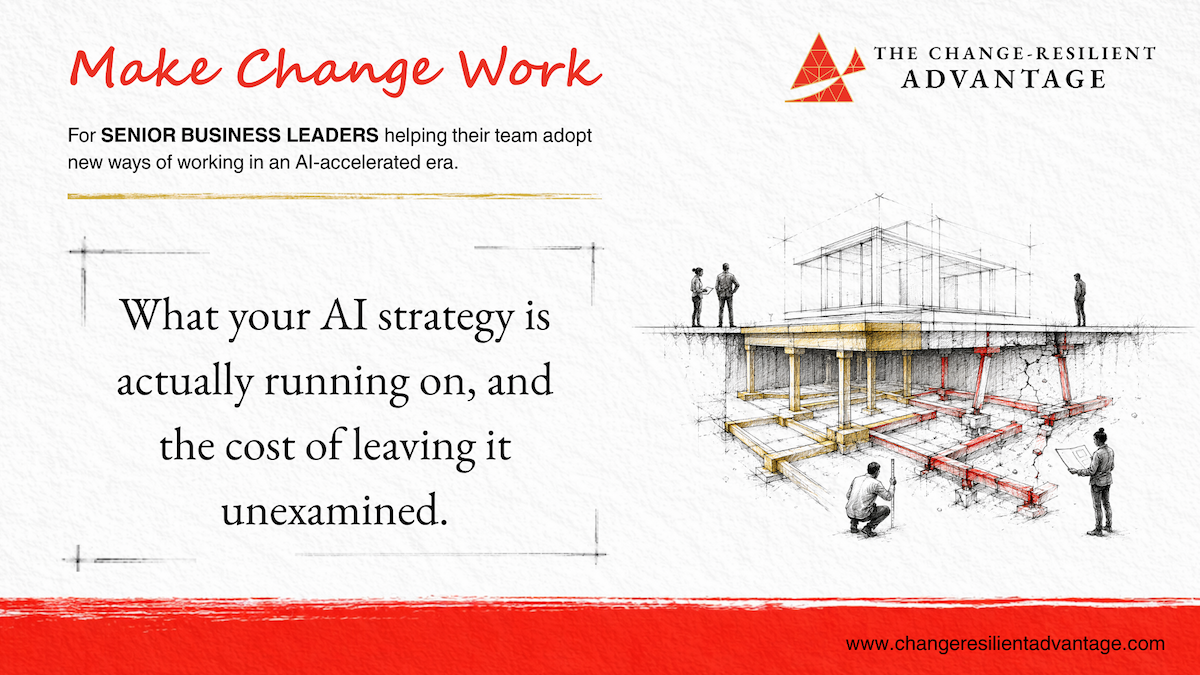
Every organization runs on a cultural operating system, determined not by the values on the wall or the stated mission, but by what gets rewarded, what gets tolerated, and what gets punished. Most AI programs have not examined it. When the stated culture and the actual culture run on different tracks, adoption stalls regardless of what tools are deployed or training delivered. Two patterns from leadership conversations illustrate what this looks like in practice, and neither is visible on any dashboard. The deeper problem is that the cultural operating system produces the feeling of forward motion even when nothing is scaling. Because the program looks like progress, there is no urgency to examine what it is running on. That comfort is where organizations lose ground they do not know they are losing. Building the leadership and culture conditions for AI adoption takes twelve to eighteen months. The technology does not wait.
Every organization is running an operating system it didn't design
The leader confidence gap we named in the last issue is a symptom. What produces it, and determines whether it spreads or resolves across the whole organization, runs deeper. It is culture, not as the values on the wall or the purpose statement in the annual report, but as the pattern of behavior that actually repeats itself, day after day, independent of what leadership intends.
Culture is defined by three things: what gets rewarded, what gets tolerated, and what gets punished. Those three dynamics are what actually create an organization’s operating system.
The agreements that formed it have been running long enough that people inside the organization no longer consciously experience them as agreements. It’s simply how things work around here. They are unwritten rules, and they are running your AI program right now, without anyone examining them.
The unwritten rules are not announced. They are demonstrated, repeatedly, through what gets celebrated, what gets quietly sidelined, and what questions stop being asked. That is your actual AI adoption policy, whether anyone has written it down or not.
The gap that doesn't show on the dashboard
In organizations where AI adoption is stalling, the stated culture and the actual culture are running on different tracks. Two examples from conversations with leaders navigating AI adoption show what this looks like in practice.
The inverted reward signal. In one knowledge-work environment where professional identity runs deep, using AI to produce work had begun to carry a quiet social penalty. Colleagues who worked without AI assistance were perceived, in some circles, as demonstrating superior capability. The organization's stated position was that it wanted adoption. The actual pattern of recognition inside the culture was pointing the other way. No mandate corrects that, because the mandate is not what is producing the behavior. The operating system is.
The manufactured metric. In another organization, the measure of AI adoption was how often people used the platform. So people used the platform. One employee, required to log several meaningful AI queries a day, met the quota by asking how to keep their houseplants alive through a drought, and the system recorded it as adoption. The stated goal was genuine uptake. What the measurement rewarded was activity, and people delivered exactly that.
Both organizations have active AI strategies. Neither has examined the operating system those strategies are running on.
The real cost of the comfort that removes urgency
Technology problems produce visible symptoms. A system fails. A project stalls. The pain is legible, and you can respond to it.
The cultural operating system produces the opposite. Tools are installed. Meetings happen. Reports go upward. The program exists. And because it exists, there is no felt reason to examine what it is running on. The reward patterns, the unwritten rules, the invisible agreements that determine what people actually do, continue unchanged beneath the activity. Nothing scales. But because nothing has visibly failed, there is no urgency to ask why.
Culture does not announce itself as a system. It announces itself as normal. After years of operating a certain way, certain questions stop being asked. Certain conversations stop happening. Certain patterns stop registering as patterns. That is not dysfunction. That is how culture works. It is the operating system doing exactly what it was built to do.
The cost lives in the time leadership does not know it is losing while everything appears to be moving. Building the human conditions for adoption, the leadership behaviors, the cultural patterns, the psychological safety that makes real experimentation possible to identify the value add use cases, is not fast work. The organizations pulling ahead are not the ones who found a shortcut. They are the ones who started. The gap is widening and the competition is forging ahead. It is just not visible from inside the comfort of apparent progress.
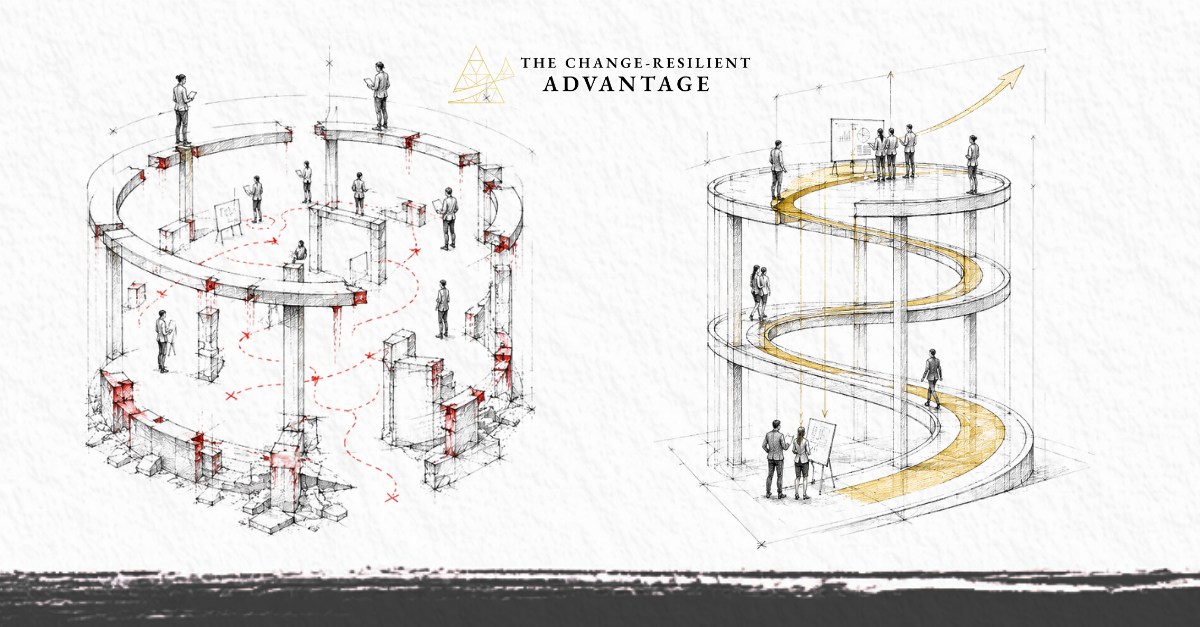
When the cultural operating system is misaligned, adoption fragments. When the conditions are right, it compounds.
Is your operating system working against your AI strategy?
We work with senior leaders to surface exactly this gap, including a culture diagnostic that identifies where unwritten rules are running counter to your AI strategy and where the real leverage is. If you are wondering whether that is what is happening in your organization, the first step is a conversation. To book one, click here.
About The Change-Resilient Advantage
The Change-Resilient Advantage partners with senior leaders and organizations navigating high-stakes change and AI adoption. We build the leadership and culture conditions that get your people to adopt new ways of working.
Clients have seen measurable results including 100% of leaders reporting increased confidence to lead their teams through restructuring, 95% of employees gaining clarity on a new organizational vision, and sustained market share growth during industry decline. Learn more at www.changeresilientadvantage.com
